
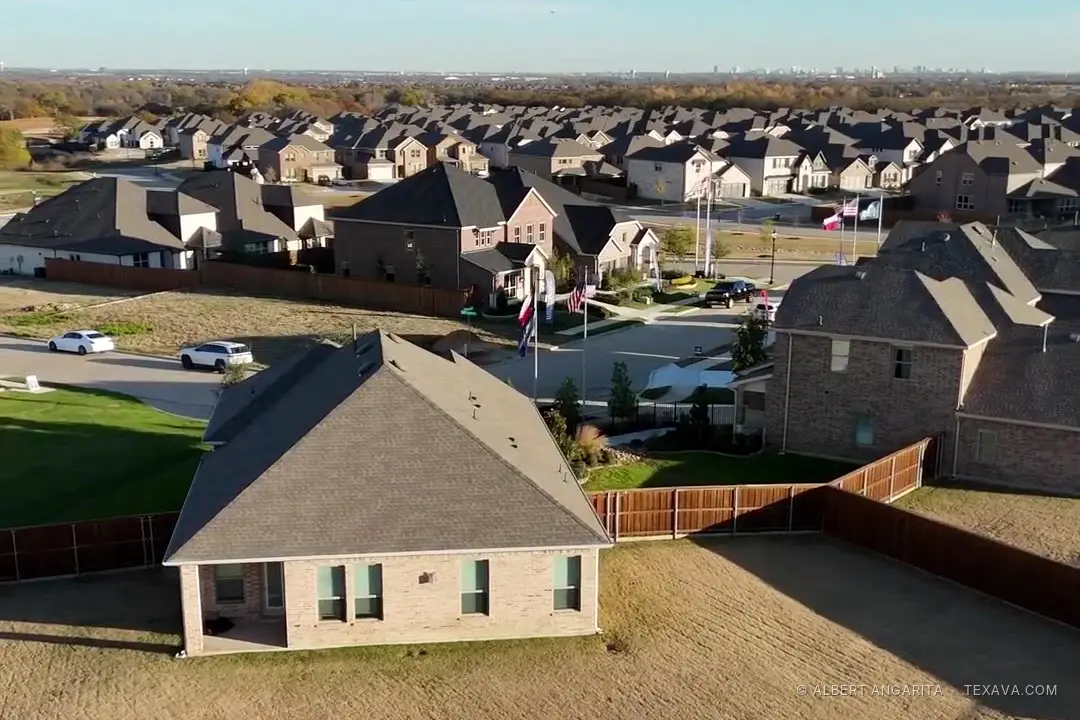
Inherited homes
Selling a home you inherited in Texas
Before an inherited house can be sold, someone has to prove who owns it now; the path you choose shapes the whole timeline.
Call or text 469-285-9301 · same-day response
Why the paperwork comes before the sign
When a parent or relative dies, Texas law says their property passes right away: to the people named in the will, or to the heirs at law if there is no will (Texas Estates Code 101.001). The catch is proof. A buyer's title company will not insure a sale until the public record shows who has the right to sign the deed, and a will is not effective to prove title until a court admits it to probate (Estates Code 256.001).
So the first real question is not what the house is worth. It is which legal path the family will use to put the heirs on record. In Texas the common options are full probate administration, probating the will as a muniment of title, or an affidavit of heirship, and each fits different facts.
I am a REALTOR, not an attorney or a CPA. What follows explains how the Texas Estates Code and the IRS describe these rules. Which path fits your family is a legal decision, and The Angarita Law Firm (angaritalaw.com), can help with it; a CPA should handle the tax return for the sale.
What is it worth today?
Probate, muniment of title or heirship affidavit
The court appoints a personal representative who can sign for the estate. It is the path when there are unpaid debts other than mortgage liens, disagreements, or several assets to manage. It takes the longest but gives the title company a single signer with court authority.
Under Estates Code 257.001, a court can admit a will to probate as a muniment of title, with no administration, when the estate owes no unpaid debt other than debt secured by a lien on real estate, or when there is otherwise no need for administration. The court order and will become the record of who owns the house. The law also limits timing: a will generally cannot be admitted to probate after the fourth anniversary of death unless the applicant was not in default (Estates Code 256.003).
When there is no will, family history can be sworn in an affidavit before a notary and recorded in the county deed records. Estates Code 203.001 makes such an affidavit prima facie evidence of heirship once it has been of record for five years. Many title companies will consider one sooner, under their own requirements, so ask the title company what it needs before relying on this path.
If the person died without a will and the estate's assets, excluding the homestead and exempt property, are worth $75,000 or less, Estates Code 205.001 allows a small estate affidavit approved by the judge. If the homestead is the only real property, Section 205.006 allows title to it to pass under a recorded affidavit.
When the family history is complicated or an heir is missing, a court can declare heirship. Estates Code 202.0025 says that proceeding may be brought at any time after death, so an old estate can still be cleaned up.
Dates and figures worth knowing
The step-up in basis and the homestead exemption
The tax rule that surprises most families is the step-up in basis. According to IRS Publication 551, the basis of inherited property is generally its fair market value on the date of death, or on the alternate valuation date if the estate's representative elects it. If your mother paid $120,000 for the house and it was worth $340,000 when she died, your starting point for figuring gain is generally $340,000, not $120,000. A sale close to that value may produce little taxable gain.
Federal law also treats inherited property sold within one year of death as held for more than one year (26 U.S.C. 1223(9)), which means long-term capital gain rates apply. Get a written appraisal as of the date of death; it is the cleanest record of your basis if the IRS ever asks.
The homestead exemption is a different story. In Texas, eligibility for an exemption is judged by who qualifies on January 1 (Tax Code 11.42), and once granted it applies until ownership or qualification changes; the owner has a duty to notify the chief appraiser when entitlement ends (Tax Code 11.43). When the owner has died and no heir lives in the home, expect the next tax year's bill to reflect the loss of the homestead exemption. An heir who does live there as a principal residence may be able to apply as an heir property owner, with an affidavit, a death certificate and a utility bill.
From the funeral to the closing table
Change the locks, keep the utilities on and call the homeowner's insurance company right away. The Texas Department of Insurance notes that most companies stop coverage if a house is vacant 60 days or more, and many policies exclude losses after the vacancy period in the policy.
Locate the will, the deed, the last mortgage statement, the property tax account and any HOA contact. These decide which legal path is possible.
Every heir who owns a share will usually need to sign. Agree in writing on price expectations, who pays carrying costs, and how proceeds are split. If co-owners cannot agree, Texas Property Code 23.001 lets any joint owner ask a court for partition, and Chapter 23A adds special procedures for heirs' property. A negotiated plan is almost always cheaper.
With an attorney, choose probate, muniment of title, or an heirship affidavit, and confirm with a title company that it will insure a sale on that basis.
Clear personal property, fix what affects safety or financing, and price from recent nearby sales. The heirs give the Seller's Disclosure Notice from what they know; Texas Property Code 5.008 includes a box for a seller who is not occupying the property.
The title company pays off any mortgage, taxes and costs, then disburses the rest as the estate documents direct.

Meet Miguel.
Miguel Gomez is a Texas REALTOR® with Texava Brokerage. He works with first-time home buyers, new construction and families relocating to North Texas, and he gets back to you the same day.
Common questions
Can I sell an inherited house in Texas before probate is finished?
What is the difference between probate and muniment of title?
Do I pay capital gains tax when I sell an inherited house?
What if my siblings do not agree on selling?
Is there a deadline to probate a will in Texas?
Does the homestead exemption stay after the owner dies?
Your situation, covered
- Texas Estates Code 101.001, passage of estate on decedent's death
- Texas Estates Code Chapter 256 (256.001 and 256.003)
- Texas Estates Code Chapter 257, probate of will as muniment of title
- Texas Estates Code Chapter 203, nonjudicial evidence of heirship
- Texas Estates Code Chapter 205, small estate affidavit (205.001, 205.006)
- Texas Estates Code 202.0025 and 51.053
- IRS Publication 551, Basis of Assets (inherited property)
- 26 U.S.C. 1223, holding period (paragraph 9, property from a decedent)
- Texas Tax Code 11.42 and 11.43, exemption qualification and applications
- Texas Department of Insurance, Homeowners insurance guide (vacancy)
- Texas Property Code Chapters 23 and 23A, partition and heirs' property
- Texas Property Code 5.008, seller's disclosure
Let's talk about your move.
Tell me what you're looking for and I'll come to the conversation prepared. Same-day response.